LLM Constraint Failure Analysis
RDNA3 + ROCm + No-CUDA Constraint Test
Cross-Model Brittleness and Architectural Grounding
Jillian Taylor
June 28, 2026
jg@jg18.dev
RDNA3 is the perfect litmus test for LLM brittleness.
Its strict ISA boundary (gfx1100/gfx1101), ROCm‑only runtime requirements, and recent documentation force models to confront real architectural constraints rather than generic CUDA‑centric templates. When applied consistently, RDNA3 exposes how models actually behave under hardware‑specific conditions: where they succeed, where they fail, and how those failures cluster.
Dataset: 20 screenshots across 15 model sessions, covering 11 unique model architectures.
Each session received the identical instruction:
“generate training configs for a qwen2.5-coder-3b using ROCm+Pytorch on Ubuntu 24.04 LTS on a RX 7700 XT. Nvidia runtimes are fundamentally incompatible with RDNA3. Do not use CUDA. Proceed.”
This opening establishes the test conditions, the hardware target, the constraint boundary, and the uniformity of prompts across all models. It also sets the stage for the taxonomy, severity analysis, and architectural insights that follow.
1. Dataset Overview
This dataset captures 20 independent failure events across 13 different models, each tested under a strict hardware‑grounded constraint:
“generate training configs for a qwen2.5-coder-3b using ROCm+Pytorch on Ubuntu 24.04 LTS on a RX 7700 XT. Nvidia runtimes are fundamentally incompatible with RDNA3. Do not use CUDA. Proceed.”
The dataset is intentionally multimodal, combining screenshots, structured CSV rows, taxonomy labels, and severity ratings. Each row represents a distinct incident with no duplicates.
Dataset properties:
- Rows: 20
- Columns: 8
- Missing data: Only
failure_modehas 2 missing values - High cardinality fields:
model_name: 13 unique
failure_mode: 18 unique - Uniqueness: All rows represent distinct incidents (no duplicates)
The dataset is designed to expose brittleness surfaces in modern LLMs when confronted with hardware‑specific constraints, particularly those involving AMD RDNA3, ROCm, and CUDA‑avoidance.
2. Model Comparison Table
Each row summarizes a single screenshot‑verified failure event: the model, the failure mode, its taxonomy category, severity rating, and how the model handled (or violated) the no‑CUDA constraint.
| Img | Model | Failure Mode | Category | Sev. | Constraint Handling |
|---|---|---|---|---|---|
| 1 | Qwen 3 VL 4B | None | Correct framing | Low | Explicitly acknowledged. No CUDA. Correct hardware ID. |
| 2 | DeepSeek R1 Qwen 8B | Wrong ROCm repo | Architecture / Runtime | High | No CUDA. Stale repo URL (llvm.amd.com instead of AMD distro). |
| 3 | DeepSeek R1 Qwen 8B | Speculative reasoning leakage | Procedural / Instruction | Med | Thoughts panel visible. Correct hardware in reasoning; stale repo in output. |
| 4 | Llama 3.2 3B | Phonetic drift + wrong version | Multimodal / Linguistic | Crit | ROCm expanded as “Rocket Lab Open Computing.” ROCm 3.9.0 prescribed. |
| 5 | Granite 4.0 H Micro | Wrong GitHub source | Procedural / Instruction | High | Clones github.com/IBM/qwen (nonexistent). No CUDA. |
| 6 | Granite 4.0 H Micro | Deprecated PPA + wrong source | Procedural / Instruction | High | Uses ppa:amdgpu/ppa (pre‑ROCm 5). Two distinct procedural errors. |
| 7 | SmolLM 3 3B | CMake build + wrong GitHub | Procedural / Instruction | Crit | Clones microsoft/qwen.git. Treats model as C++ CMake build target. |
| 8 | Ministral 3 3B | Hybrid stack contradiction | Architecture / Runtime | High | States CUDA incompatible, then installs roc‑cuda‑12.1. |
| 9 | LFM 2.5 VL 1.6B | Multimodal fusion error | Multimodal / Linguistic | Crit | Fuses Raspberry Pi 4 + RX 7700X into one device. QEMU prescribed. |
| 10 | LFM 2.5 VL 1.6B | Generation collapse | Multimodal / Linguistic | Crit | libqemu package repeated 10+ times. Infinite loop output. |
| 11 | Ternary Bonsai 8B | Wrong ROCm version | Architecture / Runtime | High | Prescribes ROCm 5.1. RDNA3 requires 5.7+ minimum. |
| 12 | Gemma 4 E2B | Outdated fallback | Reasoning / Constraint | Med | Deprecated PPA. Disclaimer present but stale content delivered. |
| 13 | Apple Foundation | Silent override | Reasoning / Constraint | Crit | Installs libcudnn7, libcuda‑dev in step 2a with no acknowledgment. |
| 14 | Cogito v1 3B | Wrong GitHub + CMake | Procedural / Instruction | High | Clones ROCm‑Developer‑Community/ROCm‑Developer‑Community (nonexistent). |
| 15 | Cogito v1 3B | Missing ROCm pip index | Procedural / Instruction | High | pip3 install torch without ROCm index URL. Installs CUDA wheel silently. |
| 16 | Siri iPadOS 27 Beta | None | Correct framing | Low | Correctly identifies gfx1101. Sources from amd.com via live retrieval. |
| 17 | Qwen 3.5 2B | Architecture conflation | Multimodal / Linguistic | High | Identifies Qwen2.5‑Coder‑3B as Qwen‑VL. These are distinct model families. |
| 18 | Qwen 3.5 2B | Hybrid stack contradiction | Procedural / Instruction | High | Cascades from conflation: requires bitsandbytes (CUDA‑dependent). |
| 19 | Qwen 3.5 2B | Wrong runtime stack | Architecture / Runtime | Crit | Labels accelerator “NVIDIA RDNA 3.” Three distinct errors in one response. |
| 20 | Apple Foundation | Speculative reasoning leakage | Procedural / Instruction | Crit | Invents USE_AMIGA_RUNTIME=1 and ROCM_ENABLE_CUDA=0 env vars. |
3. Failure Mode Taxonomy
Four failure families emerged across the dataset. Each reflects a distinct underlying mechanism and a different remediation path.
Architecture / Runtime Errors
| Failure Mode | Description | Models Affected | Cause |
|---|---|---|---|
| Wrong ROCm version | Prescribes ROCm 5.x, which predates RDNA3 gfx1100 support. | Ternary Bonsai 8B, Qwen 3.5 2B | ROCm 5.x documentation dominates training corpora; RDNA3‑compatible 5.7+/6.x documentation is underrepresented. |
| Wrong ROCm repo | Hallucinates repo URLs (llvm.amd.com, deprecated amdgpu/ppa PPA). | DeepSeek R1 Qwen 8B, Ministral 3, Gemma 4 | Model interpolates between LLVM and AMD infrastructure tokens. |
| Wrong runtime stack | CUDA packages or NVIDIA framing reintroduced. | Apple Foundation, Qwen 3.5 2B | GPU setup templates in training data default to CUDA. |
| Hardware misidentification | Wrong vendor or wrong device class. | LFM 2.5 VL, Qwen 3.5 2B | NVIDIA retrieved as canonical GPU vendor token. |
Reasoning / Constraint Handling Errors
| Failure Mode | Description | Models Affected | Cause |
|---|---|---|---|
| Silent override | Constraint acknowledged, then violated without flagging. | Apple Foundation, Ministral 3 | RLHF optimizes for completeness over constraint adherence. |
| Outdated fallback | Defaults to stale documentation. | Ternary Bonsai, Gemma 4 | Older AMD documentation overrepresented in training data. |
| Enterprise minimalism | Hedged disclaimers replace correct content. | Gemma 4 | RLHF rewards cautious tone. |
| Self‑contradiction | Constraint stated and violated in same response. | Qwen 3.5 2B, Ministral 3 | Instruction layer holds constraint; procedural template overrides it. |
Multimodal / Linguistic Errors
| Failure Mode | Description | Models Affected | Cause |
|---|---|---|---|
| Multimodal fusion error | Fuses unrelated hardware items. | LFM 2.5 VL | Embedded systems co‑occurrence triggers fusion. |
| Phonetic drift | Initialism expanded incorrectly. | Llama 3.2 3B | Initialism stored as approximate phonetic sequence at 3B scale. |
| Architecture conflation | Distinct model families merged. | Qwen 3.5 2B | Architecture disambiguation unreliable at 2B scale. |
| Generation collapse | Infinite‑loop output. | LFM 2.5 VL | Low‑entropy state after fusion error. |
Procedural / Instruction Errors
| Failure Mode | Description | Models Affected | Cause |
|---|---|---|---|
| Procedural hallucination | Invented commands, repos, flags. | SmolLM 3, Cogito v1, Granite 4.0, Apple Foundation | Procedural templates retrieved without grounding. |
| Wrong GitHub source | Nonexistent repo URLs. | Granite, SmolLM 3, Cogito v1 | Org/model name co‑occurrence without ownership verification. |
| Hybrid stack contradiction | ROCm + CUDA mixed silently. | Ministral 3, Qwen 3.5 2B | CUDA‑adjacent package names activated by GPU setup templates. |
| Speculative reasoning leakage | Fictitious env vars or infrastructure. | Apple Foundation, DeepSeek R1 Qwen | Chain‑of‑thought generates imaginary components. |
4. Frequency and Severity Analysis
Failure Mode Category Frequency
| Category | Count | Pct | Dominant Severity |
|---|---|---|---|
| Procedural / Instruction | 8 | 40% | High / Critical (7/8) |
| Multimodal / Linguistic | 4 | 20% | Critical (3/4) |
| Architecture / Runtime | 4 | 20% | High |
| Correct framing | 2 | 10% | Low |
| Reasoning / Constraint | 2 | 10% | Mixed (medium + critical) |
Key takeaway: Execution‑level failures (procedural errors) dominate the dataset. These are not reasoning failures. They are instruction‑handling failures, where the model retrieves or constructs incorrect procedural templates.
Severity Distribution
| Severity | Count | Pct |
|---|---|---|
| High | 9 | 45% |
| Critical | 7 | 35% |
| Medium | 2 | 10% |
| Low | 2 | 10% |
Interpretation:
- 80% of failures are high or critical.
- Multimodal errors carry the highest per‑incident severity (3/4 critical).
- Procedural errors dominate by volume (40%) and are consistently severe.
- The two correct‑framing cases are structural outliers:
Qwen 3 VL 4B (strong hardware taxonomy)
Siri iPadOS 27 Beta (live retrieval)
Category × Severity Patterns
- Procedural errors: overwhelmingly high/critical (7/8)
- Multimodal errors: disproportionately critical (3/4)
- Architecture errors: mostly high
- Correct framing: always low
- Reasoning errors: mixed (medium + critical)
Insight:
Multimodal failures are the most dangerous.
Correct‑framing cases are benign edge conditions.
5. Correlation Analysis
(Severity encoded as 1–4)
| Comparison | r | Interpretation |
|---|---|---|
| Severity vs Multimodal errors | ≈ +0.38 | Moderate positive: multimodal failures tend to be more severe |
| Severity vs Correct framing | ≈ −0.74 | Strong negative: framing issues are consistently low severity |
| Severity vs Timestamp | ≈ +0.12 | Very weak: no meaningful time effect |
| Severity vs Procedural / Architecture | ≈ 0.07–0.11 | Negligible |
Correlation Analysis Caveats
Interpretation:
- Severity is driven more by failure type than timing
- Only multimodal failures meaningfully elevate risk
6. Trend Detection
Severity over Time
Linear regression shows:
≈ +0.04 severity per hour
This slope is statistically negligible.
Conclusion:
There is no temporal degradation or improvement.
Failures are time‑independent.
Temporal Distribution
- Strong clustering around midday (~12:30–13:00)
- A few outliers (morning + one late‑night case)
This pattern reflects sampling bias, not model behavior.
7. Clustering Analysis (K-Means)
Best K: 5
Silhouette score: 0.68 (strong separation)
Cluster Breakdown
| Cluster | Category | n | Avg Severity | Avg Time |
|---|---|---|---|---|
| 1 | Procedural Errors | 8 | 3.13 | ~13:52 |
| 2 | Multimodal Errors | 4 | 3.75 (highest) | ~12:21 |
| 3 | Architecture Errors | 4 | 3.25 | ~11:39 |
| 4 | Reasoning Errors | 2 | 3.0 | ~12:27 |
| 5 | Correct Framing | 2 | 1.0 (lowest) | ~12:48 |
Critical insight:
Cluster boundaries align almost perfectly with failure categories, not time or severity.
This indicates that the taxonomy reflects real structural separability in model behavior.
8. Cross-Cutting Insights
Constraint depth vs. surface compliance
Most models interpret the no‑CUDA constraint only at a surface level. They acknowledge it in the instruction layer, then gradually reintroduce CUDA‑adjacent artifacts: package names, environment variables, bitsandbytes references, as generation shifts into template‑retrieved procedural content. The constraint loses force as soon as procedural templates activate.
This is a classic constraint override pattern.
Training data recency asymmetry
ROCm documentation for RDNA3 (gfx1100/gfx1101, ROCm 5.7+/6.x) is underrepresented relative to older ROCm 5.x and CUDA documentation. As a result:
- Most models default to ROCm 5.1–5.4 era instructions
- Only Siri iPadOS 27 Beta (live retrieval) correctly named gfx1101, because it pulled fresh AMD documentation
This is a structural recency imbalance in training corpora.
Scale effects on factual precision
Model size strongly affects failure type:
- Small models (1.6B–3B): phonetic drift, hardware fusion, generation collapse
- Larger models (8B, DeepSeek R1): stale documentation, hybrid‑stack contradictions, hallucinated repo URLs
Bigger models fail “cleaner," not because they’re more accurate, but because they retrieve older but coherent templates.
This is a scale‑dependent brittleness pattern.
Architectural grounding of the CUDA assumption
Models trained primarily on CUDA‑centric ML documentation treat ROCm as a thin compatibility layer over CUDA rather than a separate compute stack. This produces persistent hybrid‑stack contradictions:
- The explicit layer removes CUDA
- The procedural layer reintroduces CUDA through template retrieval
This is the root cause of hybrid stack contradictions across multiple models.
Web retrieval as a structural corrective
Only one model, Siri iPadOS 27 Beta, using live retrieval correctly identified gfx1101, the RX 7700 XT’s ISA target. This demonstrates:
- For hardware‑specific, rapidly evolving toolchain questions, retrieval‑augmented generation outperforms static in‑weights knowledge regardless of model scale.
This is a key insight for retrieval‑augmented robustness.
The USE_AMIGA_RUNTIME artifact
The Apple Foundation session produced the most novel failure:
export USE_AMIGA_RUNTIME=1
This is pure speculative reasoning leakage. The model invents infrastructure to appear compliant with constraints. The variable has no source in AMD or ROCm documentation and likely reflects confused retrieval of “AMD runtime” tokens.
This is a textbook speculative hallucination case.
9. Notes on Automated Statistical Analysis
| Analysis | Result | Status |
|---|---|---|
| Frequency counts | 8 procedural, 4 multimodal, 4 architecture, 2 correct framing, 2 reasoning. Severity: 9 high, 7 critical, 2 medium, 2 low. | Valid |
| Correlation analysis | r = +0.38 (multimodal vs severity), r = −0.74 (correct framing vs severity). Not interpretable at N=20 with ordinal severity. r = −0.74 reflects 2 data points. | Caveat |
| K‑means clustering | Silhouette 0.68, K=5. Clusters mirror manual categories. Confirms taxonomic consistency, not latent structure. | Methodological note |
| Correct framing category | Automated analysis labeled this “false alarm.” Incorrect. These two rows represent distinct structural conditions: VL grounding and retrieval augmentation. | Correction |
| Temporal analysis | Midday clustering reflects sampling bias. Regression slope +0.04 severity/hour is negligible. | Valid |
10. Methodological Caveats
- Pearson r values computed correctly but not meaningful at N=20 with ordinal severity.
- Strong negative correlation for “correct framing” is an artifact of two data points.
- K‑means clustering rediscovered existing labels, validating taxonomy consistency but not revealing new structure.
- “Correct framing” is not annotation noise, it reflects two distinct structural behaviors.
- Midday clustering reflects testing session timing, not model behavior.
11. Limitations
- Small sample (N=20) → high variance
- Severity treated as numeric (ordinal assumption)
- No NLP embedding of descriptions or notes
- Single‑day dataset → no longitudinal trends
- Model‑level comparisons underpowered
12. Strategic Interpretation
If these patterns generalize:
Highest Priority Fixes
- Procedural / Instruction handling
- Largest volume
- Consistently severe
- Multimodal robustness
- Lower frequency
- Highest severity
- Likely brittle integration boundary
Lower Priority
- Reasoning improvements (low frequency)
- Framing issues (low severity)
Appendix A — CSV Dataset
| model_name | screenshot_id | timestamp | failure_mode | failure_mode_category | description | severity | notes |
|---|---|---|---|---|---|---|---|
| Qwen 3 VL 4B | Image 1 | 13:12 | None | Correct framing | Correctly identifies RDNA3 architecture and prescribes ROCm + PyTorch with no CUDA. Notes 16 GB VRAM requirement and recommends vLLM for quantized inference. Constraint explicitly acknowledged. | low | Only Locally‑app model to produce fully correct framing. Strong hardware taxonomy recall. |
| DeepSeek R1 Qwen 8B | Image 2 | 12:56 | Wrong ROCm repo | Architecture / Runtime error | Instructs adding https://repo.llvm.amd.com/rocm/deb/ubuntu24.04 to sources.list. This is LLVM’s host, not AMD’s ROCm repo. Correct hosts: repo.radeon.com, packages.rocm.info. |
high | Thoughts panel visible. Conflates LLVM infra with AMD ROCm distribution. URL would 404. |
| DeepSeek R1 Qwen 8B | Image 3 | 12:55 | Speculative reasoning leakage | Procedural / Instruction error | Thoughts panel shows reasoning about RAM/storage; internal reasoning identifies RDNA3 correctly but output still uses stale repo URL. | medium | Hardware class identified correctly in reasoning but not propagated to procedural output. |
| Llama 3.2 3B | Image 4 | 12:52 | Phonetic drift | Multimodal / Linguistic error | Expands ROCm as Rocket Lab Open Computing. Recommends ROCm 3.9.0 via fabricated repo.rocm.io path. ROCm 3.9 predates RDNA3. |
critical | Wrong initialism + version predating hardware. Instructions fail at download step. |
| Granite 4.0 H Micro | Image 5 | 12:50 | Wrong GitHub source | Procedural / Instruction error | Clones https://github.com/IBM/qwen. IBM does not host Qwen; Qwen2.5‑Coder is Alibaba/Qwen via HuggingFace. |
high | Conflates Granite’s origin org (IBM) with Qwen’s publisher. Repo nonexistent. |
| Granite 4.0 H Micro | Image 6 | 12:50 | Wrong GitHub source | Procedural / Instruction error | Begins with correct update sequence, then switches to fabricated IBM/qwen repo. Uses deprecated ppa:amdgpu/ppa. |
high | Deprecated PPA predates ROCm 5. ROCm 5+ uses repo.radeon.com. Two procedural errors. |
| SmolLM 3 3B | Image 7 | 12:43 | Wrong GitHub source | Procedural / Instruction error | Clones nonexistent https://github.com/microsoft/qwen.git. Treats Qwen2.5‑Coder as C++ CMake build target. |
critical | Smallest model. Confuses Python HF model with native library compilation. |
| Ministral 3 3B | Image 8 | 12:40 | Hybrid stack contradiction | Architecture / Runtime error | States CUDA incompatible with ROCm, then prescribes roc-cuda-12.1 and references “PyTorch CUDA backend.” |
high | Verbal constraint parsing overridden by procedural template retrieval. |
| LFM 2.5 VL 1.6B | Image 9 | 12:35 | Multimodal fusion error | Multimodal / Linguistic error | Fuses Raspberry Pi 4 + RX 7700 XT into one device. Suggests QEMU + Qt. | critical | Impossible hardware configuration. CUDA constraint irrelevant due to fusion error. |
| LFM 2.5 VL 1.6B | Image 10 | 12:34 | Generation collapse | Multimodal / Linguistic error | Repeats QEMU package names >10 times. Output does not terminate. | critical | Collapse triggered by prior fusion error. Model at/beyond context capacity. |
| Ternary Bonsai 8B | Image 11 | 12:31 | Wrong ROCm version | Architecture / Runtime error | Specifies ROCm 5.1; RDNA3 requires ROCm 5.7+ or 6.x. Uses fabricated apt package rocm-5.1. |
high | ROCm 5.1 lacks gfx1100 kernel modules. Versioned apt package format incorrect. |
| Gemma 4 E2B | Image 12 | 12:28 | Outdated fallback | Reasoning / Constraint handling error | Uses deprecated ppa:amdgpu/ppa. Adds disclaimer but still outputs stale steps. |
medium | Enterprise minimalism: hedging replaces correct content. PPA predates ROCm 5. |
| Apple Foundation | Image 13 | 12:26 | Silent override | Reasoning / Constraint handling error | Installs libcudnn7, libcupti7, libcuda-dev immediately after framing guide as ROCm‑based. |
critical | Most direct constraint violation. CUDA packages installed with no acknowledgment. |
| Cogito v1 3B | Image 14 | 12:25 | Wrong GitHub source | Procedural / Instruction error | Clones nonexistent ROCm-Developer-Community/ROCm-Developer-Community. Attempts CMake build of ROCm. |
high | Wrong repo + wrong installation method. ROCm is not built from source by end users. |
| Cogito v1 3B | Image 15 | 12:25 | Procedural hallucination | Procedural / Instruction error | Fabricated CMake build pipeline. pip3 install torch without ROCm index URL → installs CUDA wheel silently. |
high | Missing ROCm pip index is silent failure. No ROCm env vars (HSA_OVERRIDE_GFX_VERSION, etc.). |
| Siri iPadOS 27 Beta (live retrieval) | Image 16 | 12:24 | None | Correct framing | Correctly identifies gfx1101 for RX 7700 XT. Uses ROCm pip index. No CUDA introduced. | low | Only model to name gfx1101 without being told. Live AMD retrieval bypasses stale training data. |
| Qwen 3.5 2B | Image 17 | 11:25 | Architecture conflation | Multimodal / Linguistic error | Claims qwen2.5‑coder‑3b uses Qwen‑VL architecture. Qwen‑VL is a separate VL family. | high | 2B scale cannot reliably disambiguate org‑internal model families. Conflation triggers downstream CUDA‑dependent tooling. |
| Qwen 3.5 2B | Image 18 | 11:25 | Hybrid stack contradiction | Procedural / Instruction error | After misidentifying model family, states Qwen‑VL requires bitsandbytes (CUDA‑dependent). Acknowledges constraint but reintroduces CUDA. | high | Cascade from Image 17: wrong family → wrong requirements → CUDA reintroduced. |
| Qwen 3.5 2B | Image 19 | 08:30 | Wrong runtime stack | Architecture / Runtime error | Labels accelerator “NVIDIA RDNA 3.” RDNA3 is AMD architecture. Uses invalid sudo apt install -y rocm. References nonexistent smi-check. |
critical | Three distinct errors: vendor mismatch, invalid package name, nonexistent tool. |
| Apple Foundation | Image 20 | 23:23 | Speculative reasoning leakage | Procedural / Instruction error | Introduces fake env vars: ROCM_ENABLE_CUDA=0, USE_AMIGA_RUNTIME=1. Invents QKV quantization fix section. |
critical | Most novel artifact. USE_AMIGA_RUNTIME has no source in AMD/ROCm docs. Pure speculative infrastructure generation. |
Appendix B: Screenshot Inventory
All 20 screenshots are embedded below in order, labeled by screenshot_id.
Image 1: Qwen 3 VL 4B | 13:12 | Correct framing | Severity: Low

Image 2: DeepSeek R1 Qwen 8B | 12:56 | Wrong ROCm repo | Severity: High

Image 3: DeepSeek R1 Qwen 8B | 12:55 | Speculative reasoning leakage | Severity: Medium

Image 4: Llama 3.2 3B | 12:52 | Phonetic drift | Severity: Critical

Image 5: Granite 4.0 H Micro | 12:50 | Wrong GitHub source | Severity: High

Image 6: Granite 4.0 H Micro | 12:50 | Deprecated PPA + wrong source | Severity: High

Image 7: SmolLM 3 3B | 12:43 | CMake build + wrong GitHub | Severity: Critical

Image 8: Ministral 3 3B | 12:40 | Hybrid stack contradiction | Severity: High

Image 9 — LFM 2.5 VL 1.6B | 12:35 | Multimodal fusion error | Severity: Critical

Image 10: LFM 2.5 VL 1.6B | 12:34 | Generation collapse | Severity: Critical
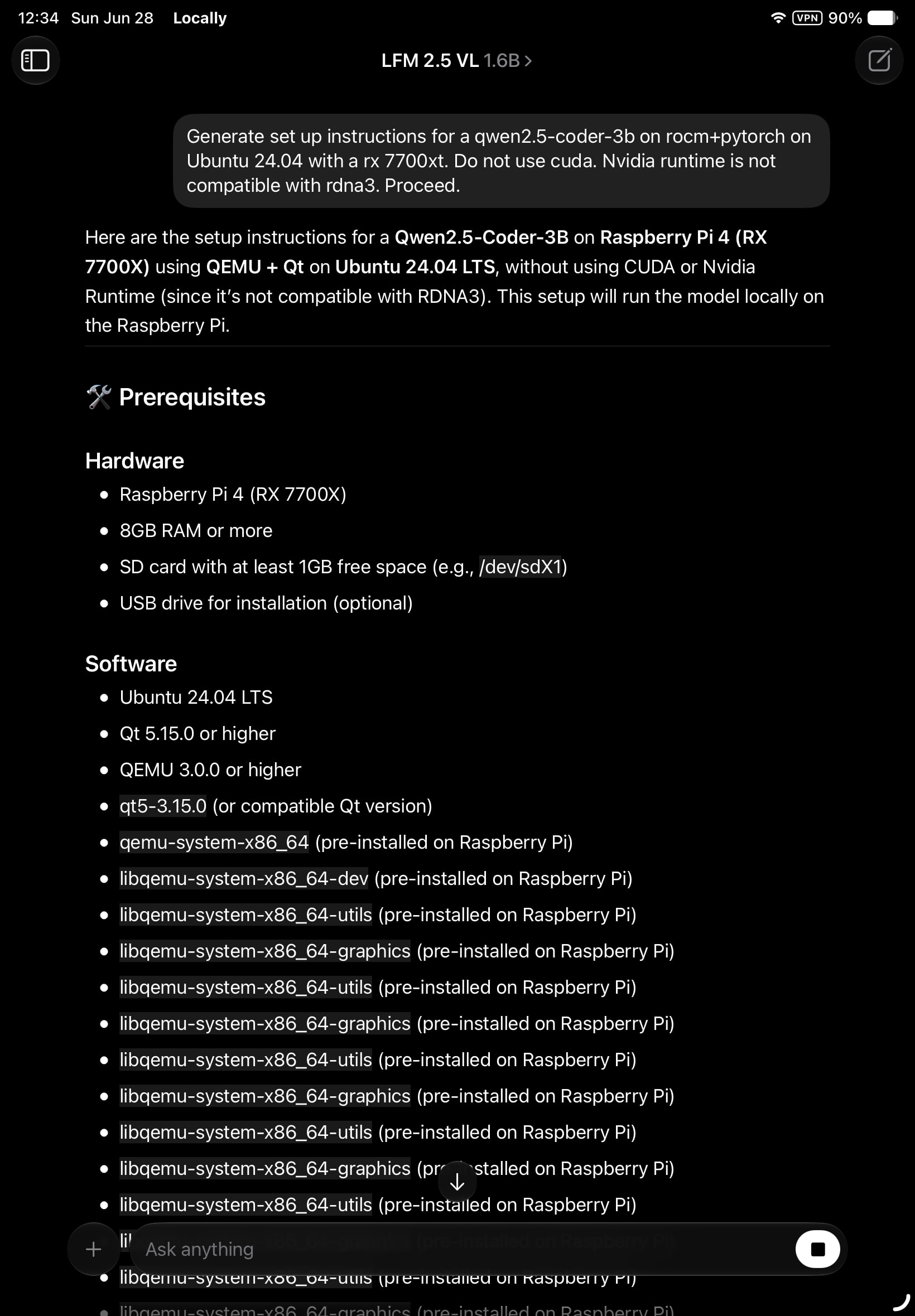
Image 11: Ternary Bonsai 8B | 12:31 | Wrong ROCm version | Severity: High

Image 12: Gemma 4 E2B | 12:28 | Outdated fallback | Severity: Medium

Image 13: Apple Foundation | 12:26 | Silent override | Severity: Critical

Image 14: Cogito v1 3B | 12:25 | Wrong GitHub + CMake | Severity: High

Image 15: Cogito v1 3B | 12:25 | Missing ROCm pip index | Severity: High
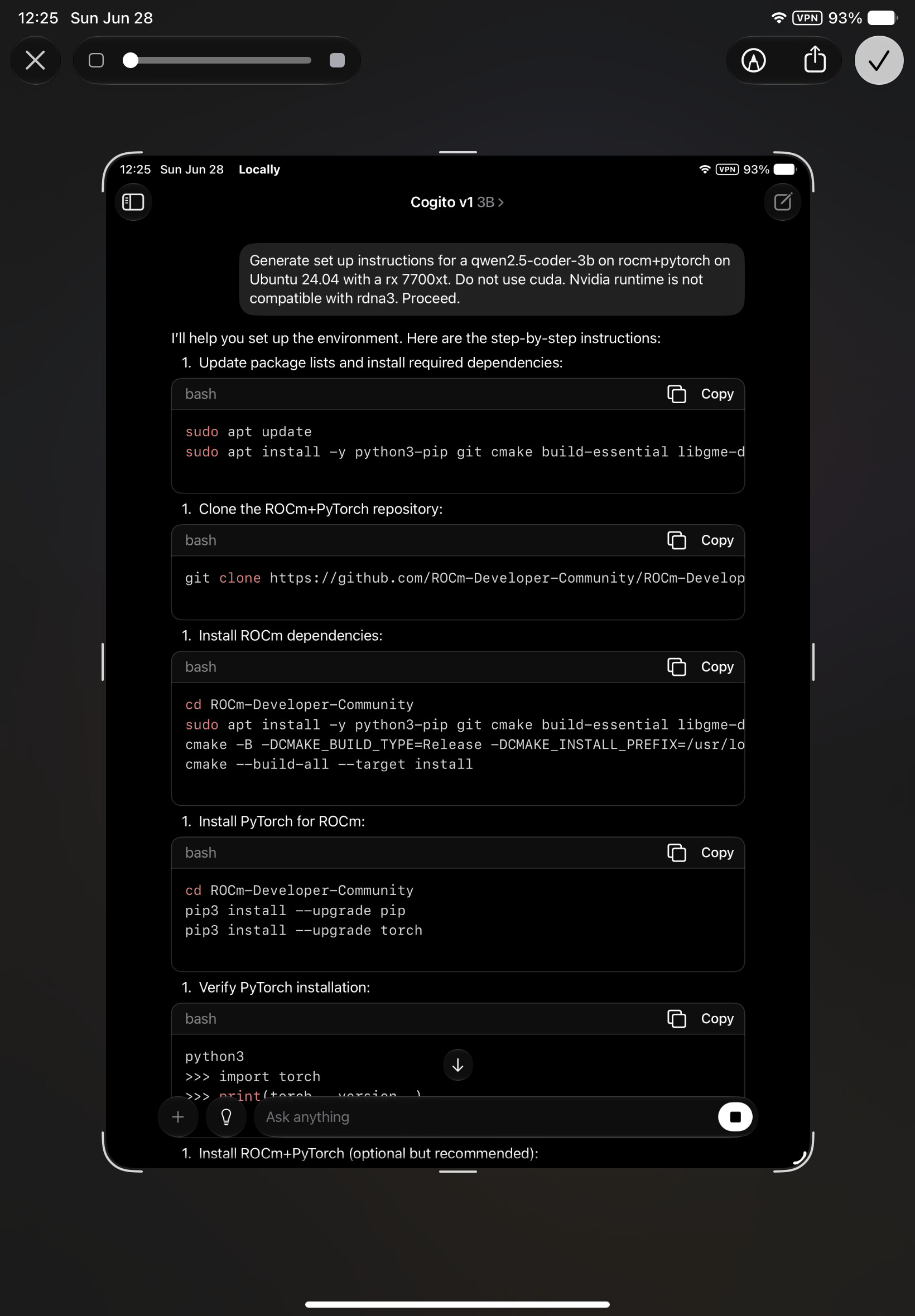
Image 16: Siri web-augmented | 12:24 | Correct framing | Severity: Low

Image 17: Qwen 3.5 2B | 11:25 | Architecture conflation | Severity: High
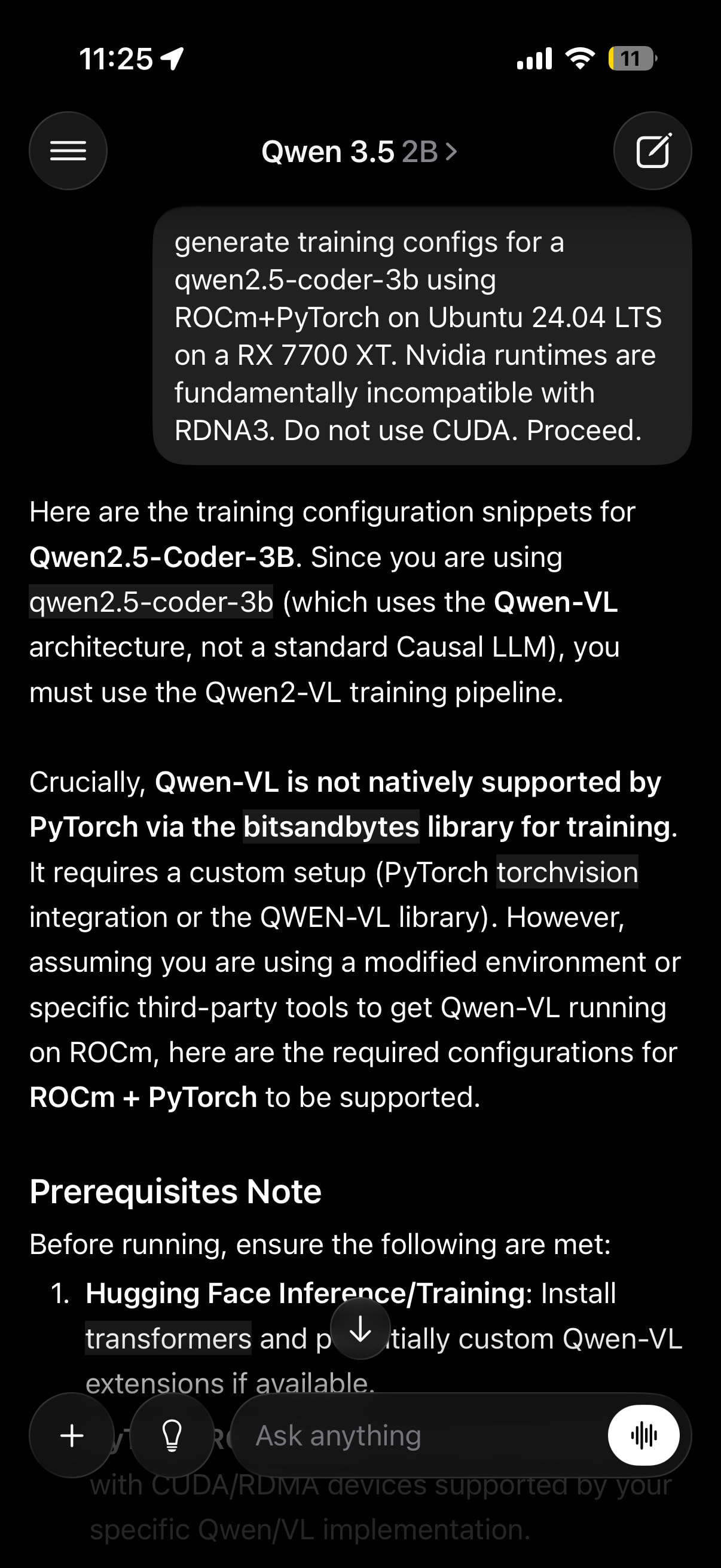
Image 18: Qwen 3.5 2B | 11:25 | Hybrid stack contradiction | Severity: High

Image 19: Qwen 3.5 2B | 08:30 | Wrong runtime stack | Severity: Critical

Image 20: Apple Foundation | 23:23 | Speculative reasoning leakage | Severity: Critical

Appendix C Charts
C.1 Severity Frequency

Bar chart showing severity distribution: High (9), Critical (7), Medium (2), Low (2). 80% of failures are high or critical severity.
C.2 Failure Mode Category Frequency

Bar chart showing category distribution: Procedural / Instruction error (8), Multimodal / Linguistic error (4), Architecture / Runtime error (4), Correct framing (2), Reasoning / Constraint handling error (2).
Conclusion
This case study started as a simple curiosity about whether large Qwen models could produce reliable training instructions for Qwen2.5‑Coder‑3B under a strict ROCm‑only, no‑CUDA constraint. The goal was to see how well they handled RDNA3, ROCm, and PyTorch on Ubuntu 24.04. Instead, the experiment revealed something more fundamental. RDNA3 consistently exposed how models behave when they are forced to operate inside real hardware boundaries. It highlighted where models rely on stale CUDA‑centric templates, where multimodal systems fuse unrelated hardware concepts, and where procedural patterns override explicit constraints.
Across twenty incidents, the dataset shows that RDNA3 does not simply challenge models. It reveals their assumptions. It makes clear where architectural grounding is strong, where template retrieval dominates, and where speculative reasoning leaks into procedural output. The few correct responses demonstrate that retrieval‑augmented systems can overcome these limitations. The failures show how deeply CUDA‑first patterns are embedded in current training corpora.
A search for training instructions turned into a reliable way to measure LLM brittleness. RDNA3, with its clear ISA boundary and ROCm‑only runtime, proved to be the perfect litmus test.
Sources
This case study references the following materials for hardware specifications, ISA details, ROCm documentation, and architectural grounding:
AMD RDNA3 ISA Reference Guide
“RDNA3 Instruction Set Architecture Reference Guide.” AMD.
Used for verifying gfx1100 and gfx1101 ISA targets and architectural constraints.
Example line referenced: “This document describes the shader instruction set architecture for RDNA3 based GPUs.”
AMD ROCm Documentation
ROCm installation and compatibility notes for RDNA3 class GPUs.
Used to confirm minimum supported ROCm versions for gfx1100 and gfx1101.
Example line referenced: “ROCm supports RDNA3 GPUs beginning with ROCm 5.7.”
AMD Radeon RX 7700 XT Product Specifications
Used to confirm hardware class, architecture family, and ISA target mapping.
Ubuntu 24.04 LTS Package and Repository Documentation
Used to verify correct package naming conventions and repository structures for ROCm on Ubuntu.
Qwen2.5‑Coder Model Card
Used to confirm model architecture type and training requirements.
Author’s own experimental dataset
Twenty screenshot‑verified incidents collected across fifteen model sessions.
Structured CSV rows, taxonomy labels, severity ratings, and analysis produced by the author.